Redmond vs Sammamish: Where Should Eastside Buyers Look Next?
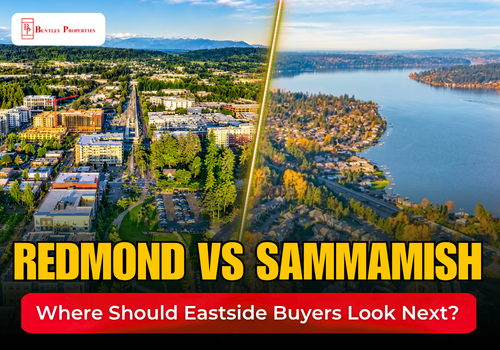
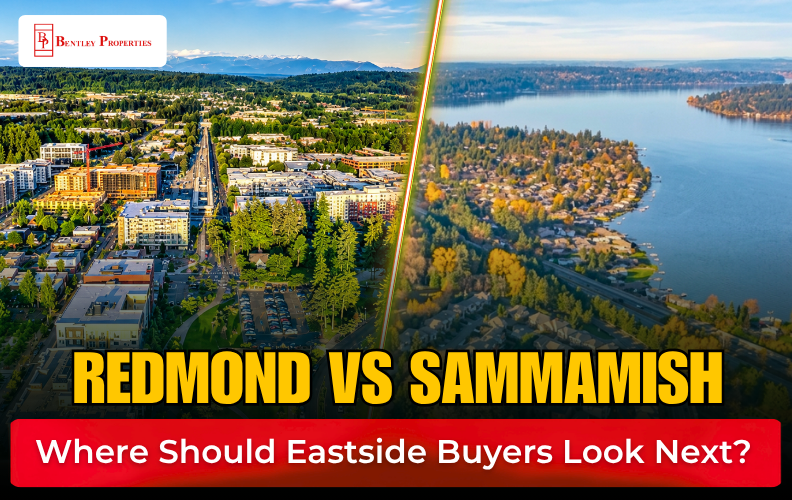 Redmond and Sammamish come up in the same breath a lot on the Eastside — both sit east of Lake Sammamish from the I-405 corridor, both draw heavily from the tech industry, and both carry a reputation for strong schools. But once you actually walk both cities, they feel like different bets. One is doubling down on density and transit; the other is staying resolutely suburban. Here's how to think about which one fits your next move.
Commute and Location
Redmond's biggest change this year is transit. With the East Link Extension now running, the 2 Line serves both Redmond Technology and Downtown Redmond stations, putting a direct rail connection to Bellevue and Seattle within reach for anyone living near the corridor. Add in Redmond's existing role as home to Microsoft's main campus and a growing cluster of other tech employers, and you get a city where a meaningful share of buyers can genuinely reduce or drop their commute.
Sammamish doesn't have that option. It sits up on the plateau east of Lake Sammamish, reached mainly by SR-202 or surface streets from Redmond and Issaquah, with no rail service planned. For most Sammamish residents working in Redmond, Bellevue, or Seattle, the car (or a long park-and-ride bus ride) is still the way in and out. That's the central trade-off buyers are making, whether they realize it or not.
Schools
Both cities are known for strong public schools, which is a big part of why families cross-shop them in the first place. Redmond is served primarily by the Lake Washington School District, with a portion of the city in the Riverview district. Sammamish is split between Lake Washington and Issaquah School District boundaries, including well-regarded high schools on both sides. If schools are a top priority, the honest answer is to check the specific attendance boundary for any address you're considering in either city — district lines don't always follow city limits, and which school a specific street feeds into can matter more than which city it's in.
Housing Stock and Lot Size
This is where the two cities diverge the most. Redmond has a real mix: established single-family neighborhoods, newer townhome and condo development clustered around Downtown Redmond and the light rail stations, and everything in between. It's the more urban of the two, and increasingly the more walkable one, as redevelopment continues near transit.
Sammamish is overwhelmingly single-family, largely built out through master-planned subdivisions from the 1990s and 2000s, with noticeably larger lots than you'll typically find in Redmond or closer-in Eastside cities. That extra land is a big part of what buyers are paying for when they choose Sammamish — space, privacy, and a quieter street, rather than proximity to a commercial core.
Lifestyle and Amenities
Redmond's identity is shifting toward "tech town with a downtown," anchored by Redmond Town Center, Marymoor Park, and the Eastrail regional trail, with more restaurants and retail arriving as the area around the light rail stations builds out. It rewards buyers who want some walkable, mixed-use energy alongside their neighborhood.
Sammamish leans quiet and residential by design — there's comparatively little commercial density, and that's largely the point for the buyers who choose it. Lake Sammamish State Park and the Sammamish Plateau's trail network are the main draws, along with the kind of predictable, low-traffic streets that appeal to families prioritizing space over stimulation.
Who Tends to Fit Where
Buyers who want walkability, a shorter or transit-based commute, and a bit more urban energy tend to gravitate toward Redmond, especially now that light rail is live. Buyers who want more house and more land, a quieter pace, and are comfortable with a longer, car-dependent commute tend to end up in Sammamish. Price expectations should follow that trade-off: more land and newer construction in Sammamish generally command a premium over comparable square footage closer to Redmond's urban core, though the specific numbers move with the broader King County market covered in our monthly updates.
The Bottom Line
Neither city is the "better" choice in the abstract — they're built for different priorities. If you're weighing the two, the most useful exercise is to actually drive your commute at rush hour from a specific address in each, and to sit down with the school boundaries for that address rather than the city's reputation as a whole. Want help narrowing in on the right neighborhood in either city for your situation? I'm happy to walk through the specifics — reach out anytime.